


Our nanocoating technology is based on an advanced screen printing process that allows various coating pastes to be applied to a wide range of materials. This innovative process enables us to develop products that are not only powerful but also multifunctional—a true game changer in the industry.
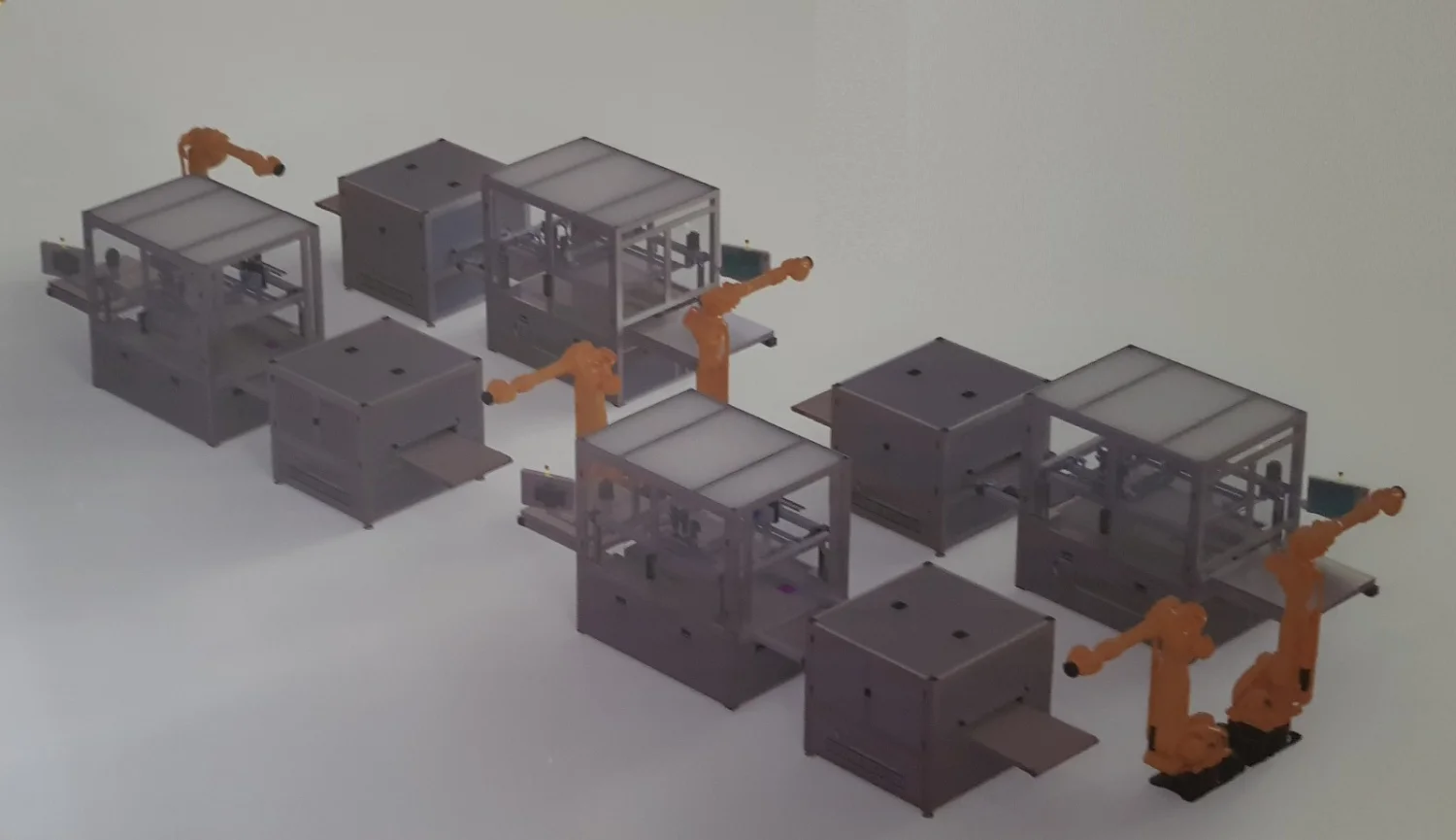
The simple production process at a glance: The production facility consists of 8 plant modules, each equipped with a crane robot and a separate drying chamber. Every 30 seconds, the finished products leave the facility, corresponding to a daily production of 5,000 units or 5,000 square meters.

Fully automated process, applicable on all flat surfaces

The carbon emissions are climate-neutral, posing no environmental burden

The innovative plant technology is fully automated and self-cleaning

The facilities operate continuously around the clock

Complete monitoring of all technical processes

Unproblematic transition to other production goods, e.g.,
- Heating systems
- Energy storage technology
- Power generation
- Air conditioning units
- Lighting

Simple construction requirements, easy operation of the facility, fully automated production process

Every company that we support as a cooperation partner will benefit from the development of new products

The combinability of various products sets no limits to product diversity

The required production hall can be maximally utilized through a variable arrangement of the plant modules

Low Technical Risks for Printing Pastes: The pastes are produced using laboratory machines where renowned manufacturers guarantee scalability. This reduces the risk of technical issues during production upscaling.
Resource Availability: Since the pastes do not require rare earth elements, the risk of raw material shortages is not seen as realistic. Generally, it is expected that the pastes will become cheaper over time as the price heavily depends on the production volume.
Shifting Energy Policies: Many countries are undergoing a politically supported shift in energy usage and environmental protection. This shift away from traditional energy sources like coal, oil, and gas towards alternative solutions such as special coatings will likely shape the future over the coming decades. The entire product line can be deployed and offered in this context.
Versatility of Coatings: The greatest advantage is undoubtedly the combinability of individual coatings with each other. It does not matter how many functions the finished product is intended to have.
Example: A solar panel can also function as a heater, which can be activated in the cold months to ensure that the solar panels remain free of snow loads. Alternatively, solar panels on facades can be equipped with a lighting coating, serving as house lamps in the dark.
These points highlight the strategic positioning of the products in response to market and environmental trends, leveraging technological innovation and resource independence.
An der Kolonnade 6
10117 Berlin
Telefon: +493075437140
Mobil: +49 (0)176 - 75271980
Fax: +49 30 75437139
E-Mail: info@nano-surface-tec.de